
Why fruit brandies are the underestimated pinnacle of the craft – and what makes genuine fruit brandies special
⏱ Geschätzte Lesezeit: 8 Minuten
We recently had friends visiting. They raved about their holiday in Scotland and its whisky distilleries. Whisky, they said, is something very special, so elaborate and complex, and more difficult to produce than fruit brandies.
Umm, what?!
My pulse immediately started racing.
Two worlds – both fascinating
Don't get me wrong: I love whisky! The Scottish distilleries are impressive, and good whisky is an art in itself. My husband Matthias will confirm: No matter where we go on holiday, a visit to a distillery is always a must – whether whisky, rum, or gin. Every craft has its own fascination and its own standards.
But the idea that whisky making is inherently more demanding than fruit brandy distilling got me thinking. Within the distilling industry, the vast majority agree that fruit brandy distilling is one of the most challenging disciplines. The majority of distilleries that produce both products – fruit brandies and whiskies – would confirm this.
And I immediately had a sense of déjà vu: I had an almost identical experience a few years ago when friends returned from a cruise. They had visited a rum distillery in Barbados and came back with a very similar enthusiasm. I've also heard similar stories about gin.
But why is it that spirits from distant countries often receive more attention than the fruit brandies that are produced right on our doorstep with just as much skill and passion?
Holiday memories are emotionally charged
On vacation, we're more relaxed, surrounded by beautiful scenery, good food, and pleasant people. This emotional charge colors our memories. Furthermore, our memory is selective – it tends to store the pleasant aspects, while unpleasant ones fade away.
Imagine:
Imagine...

In Normandy: “What a sight – the old Frenchman in the apple orchard, golden evening sun, a wicker basket full of apples. That’s real life! He’s probably making his own Calvados, completely traditional, with love and peace. So original, so authentic.”
On the Swabian Alb: "Oh, Huber again. Still out and about with his old cider basket. The meadow is looking pretty wild already. Is it even worth it anymore? He's probably distilling a few bottles again – it's his hobby, after all."
And no, this isn't about ruining holiday memories or diminishing enthusiasm for foreign cultures. On the contrary: this enthusiasm and passion for the culture and craftsmanship (no matter where) is something we absolutely must preserve.
I'm simply envious. And I'll explain why in this blog post.
Visibility and marketing make a difference
Whisky – especially Scotch whisky – has achieved impressive brand recognition. We all have the same images in our minds: wide meadows, breathtaking hills, rugged coastlines, wisps of fog, wooden casks against stone walls... In Scotland, whisky is embraced, and its export is politically promoted and supported. This is admirable and has rightfully earned Scotch whisky worldwide acclaim.
What about us fruit distillers? We're often small-scale or limited-production distilleries – and we're not even allowed to export our fruit brandies. Fruit brandies are true rarities internationally. Moreover, we're primarily found in German-speaking countries, and specialist literature in English is scarce. This makes it difficult to gain international recognition – regardless of the quality of our work.
We've been around for hundreds of years. And we're often ridiculed. The art of fruit distilling is usually passed down within the family from one generation to the next – as are the fruit trees and orchards, our foundation for distinctive, high-quality brandies.
Our craft has simply always been there. And just because the neighbor has a still or grandpa always had one in his shed, it can hardly be something as special as the still of an enchanted whisky distillery in the Scottish Highlands.
What makes a true fruit brandy?
Before I show you the particular challenges involved in distilling fruit brandy, let me explain what a real fruit brandy actually is. Because there are a great many spirits on the market that, based on their packaging, suggest they are fruit brandies.
The cheapest way: neutral alcohol + flavoring
The legislation grants manufacturers a great deal of freedom – let's call it "food technology creativity". To produce a Williams pear brandy, it would be permissible to mix neutral alcohol with 96% ABV with Williams pear flavoring and water.
Advantage: This Willi can be produced regardless of the season, it is cheap to produce and requires no distillation knowledge.
Disadvantage: This method of production is the most unnatural way to make Williams pear brandy.
The real fruit brandy – a Williams Christ example
A Williams Christ fruit brandy (or fine brandy) must always be distilled from the fermented mash of Williams Christ pears.
The process:
- The ripe pears are mashed after harvesting.
- The mash begins to ferment – the fructose it contains is transformed into alcohol.
- Once the mash has completely fermented, it is distilled.
- The high-proof Williams pear distillate is then diluted with water to a drinkable strength (e.g., 42% vol).
- The addition of rounding sugar is limited to 10g (BRENNLUST distillates are generally without rounding sugar – in our opinion, this is an adulteration)
The yield is minimal: From 100 liters of mash (approx. 120 kg of pears) I get about 6 liters of Williams pear brandy at 42% ABV – that's 12 bottles of 0.5 liters each. (See also the raw material list with official customs yield rates .)
The challenges of genuine fruit brandy
- Time-consuming: Tree care, manual harvesting, mashing, distillation – countless steps are required before the distillate gets into the bottle.
- Dependence on nature: We can only mash what nature provides. Sometimes there's a lot of fruit, sometimes little, sometimes none at all. In 2023, we couldn't distill any Williams pear brandy – a severe hailstorm destroyed the entire harvest.
- Seasonal production: We can only produce once a year, in autumn when the pears ripen.
- Low yield: Output is minimal compared to input. From a business perspective, this is a questionable undertaking.
My vision: Genuine fruit brandies as a proud cultural asset
Everyone should know and appreciate genuine fruit brandy and celebrate it as a proud, local cultural asset.
And this vision is not just my personal conviction – it was officially confirmed in 2024: The traditional art of distilling was included in the list of intangible cultural heritage of the German UNESCO Commission.
This means that our time-honored craft is now receiving the cultural recognition it deserves. For me, as a fourth-generation distiller, this is an incredible honor and a confirmation of our work.
What do distillers who produce both say?
As a state-certified distiller and trained fine spirits sommelier, I am familiar with both production processes. But the most credible opinions come from distillers who have practically distilled both spirits and can compare them from their own experience.
I asked my distiller network: "You distill both fruit and whisky. Which of the two is more difficult to distill?"
Sofie Masson, Brandhaus 7, 77740 Bad Peterstal-Griesbach:
"Definitely fruit!!! Distilling whisky isn't rocket science; it mainly depends on barrel aging. Fruit is much more delicate."
Wolfgang Hillreiner, Hill Distillery, 82276 Adelshofen:
"Definitely fruit! Sure, you need slightly different equipment for whisky, but if you're not completely incompetent, practically anyone can produce a decent distillate. Okay, selecting the right cask and proper storage, etc., are another challenge altogether, but basically, you can't really go wrong with whisky. Grain is grain. Available year-round and always in good quality. The time of year I distill it is more or less irrelevant. Fruit, on the other hand, I don't need to tell you. Optimal ripening time, optimal harvest, optimally prepared mash, optimal and slow fermentation, optimal and aroma-preserving distillation. And optimal storage afterward, if possible. If even one aspect isn't optimal, the result is already inferior. With whisky, however, the art lies much more in proper cask management, but less in the distillation itself."
Katharina Heinrich, 74613 Öhringen:
"I like fruit. However, I haven't made whisky that often and am probably not as deeply involved with the subject as I am with fruit. But the extremely long cask aging smooths out quite a few things... However, if you smoke or toast the malt yourself, it might be a different story."
Distilleries focusing on whisky:
Fabian Rohrwasser, FARO Whiskey Distillery, 21493 Schretstaken
"Fruit is more delicate and requires completely different settings at the distillery than whisky. With whisky, the challenge lies in ensuring it becomes whisky and not grain spirit. However, both are essentially equally difficult to distill."
Dieter Kübler, 75454 Michelfeld
"Distilling grain is easier and more pleasant for me. I have decades of experience in this area that I can draw upon."
What fruit brandies really are
Fruit brandies are the preserve of our local orchards. They are the passionate expression of a craft with a centuries-old tradition. They reveal the gentle side of our fertile nature, but also the harsh side when weather conditions have left their mark on the fruit.
Fruit brandies are genuine, unadulterated, and honest.
Did you know that a single apple contains over 300 different aromas? Floral, tropical, citrusy, spicy, and nutty aromas – and this isn't just fantasy, it's scientifically proven. Every single aroma molecule is actually present in the fruit.
This diversity makes the world of aromas so wonderfully fascinating – and shows how much nature is in every drop.
What remains for us: Creating visibility
Fruit brandies deserve the same recognition as their internationally acclaimed counterparts. And because we are not allowed to export and don't have a large marketing machine behind us, we have to take action ourselves.
What does that mean?
We need to tell our stories. Share our craft with our customers. Pass on the passion. If we can ignite that spark, we don't necessarily need international stages.
Because it's so much nicer when we have our happy customers right in front of us and see the enthusiasm in their eyes – just like the Scottish distillers get to experience in their distilleries.
I'm not against whisky or other spirits – I have deep respect for any honest craft. But I do wish that fruit brandies would also receive the appreciation they deserve.
And I cordially invite you: Come along, taste real fruit brandies, let yourself be enchanted by the world of aromas. Experience for yourself what it means when over 300 aromas of a single apple are united in one glass.
Because genuine fruit brandies deserve to be known, appreciated, and celebrated.
3 comments
Our bestsellers
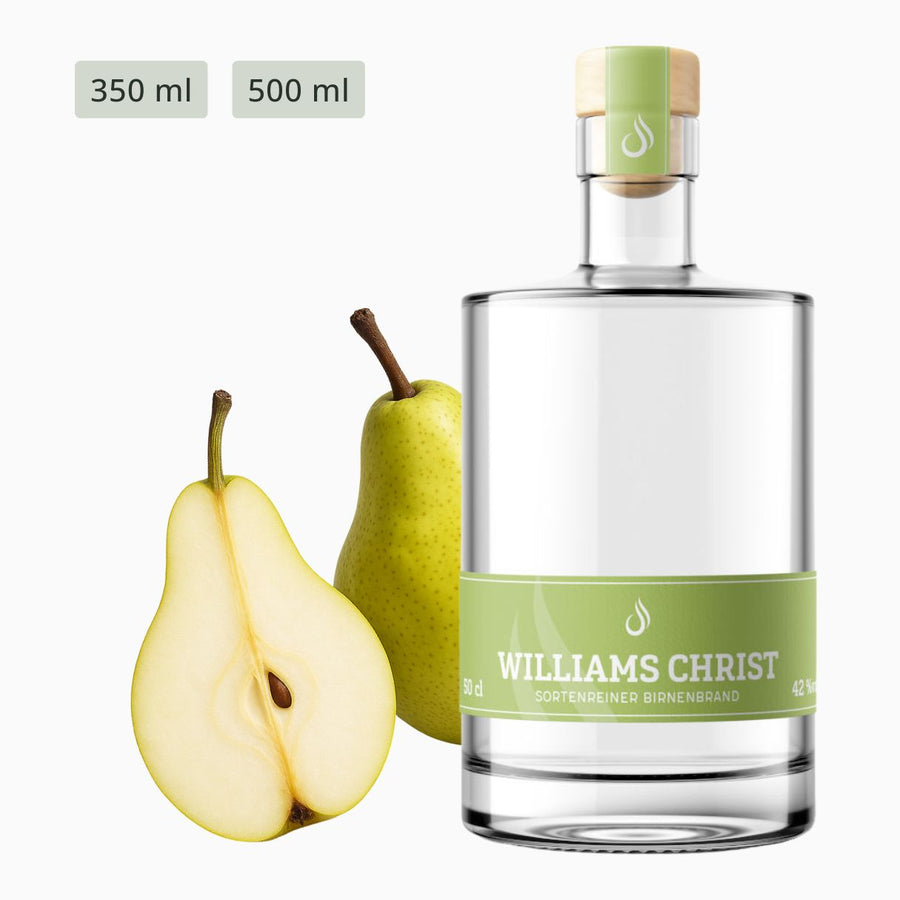
View all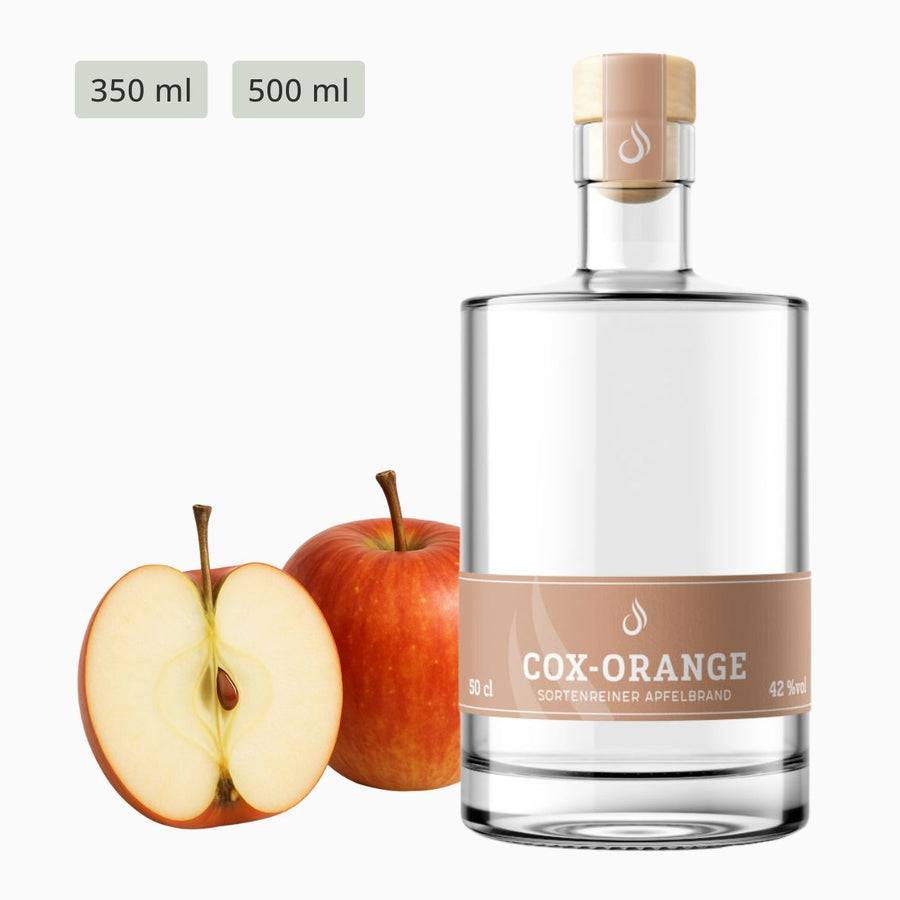




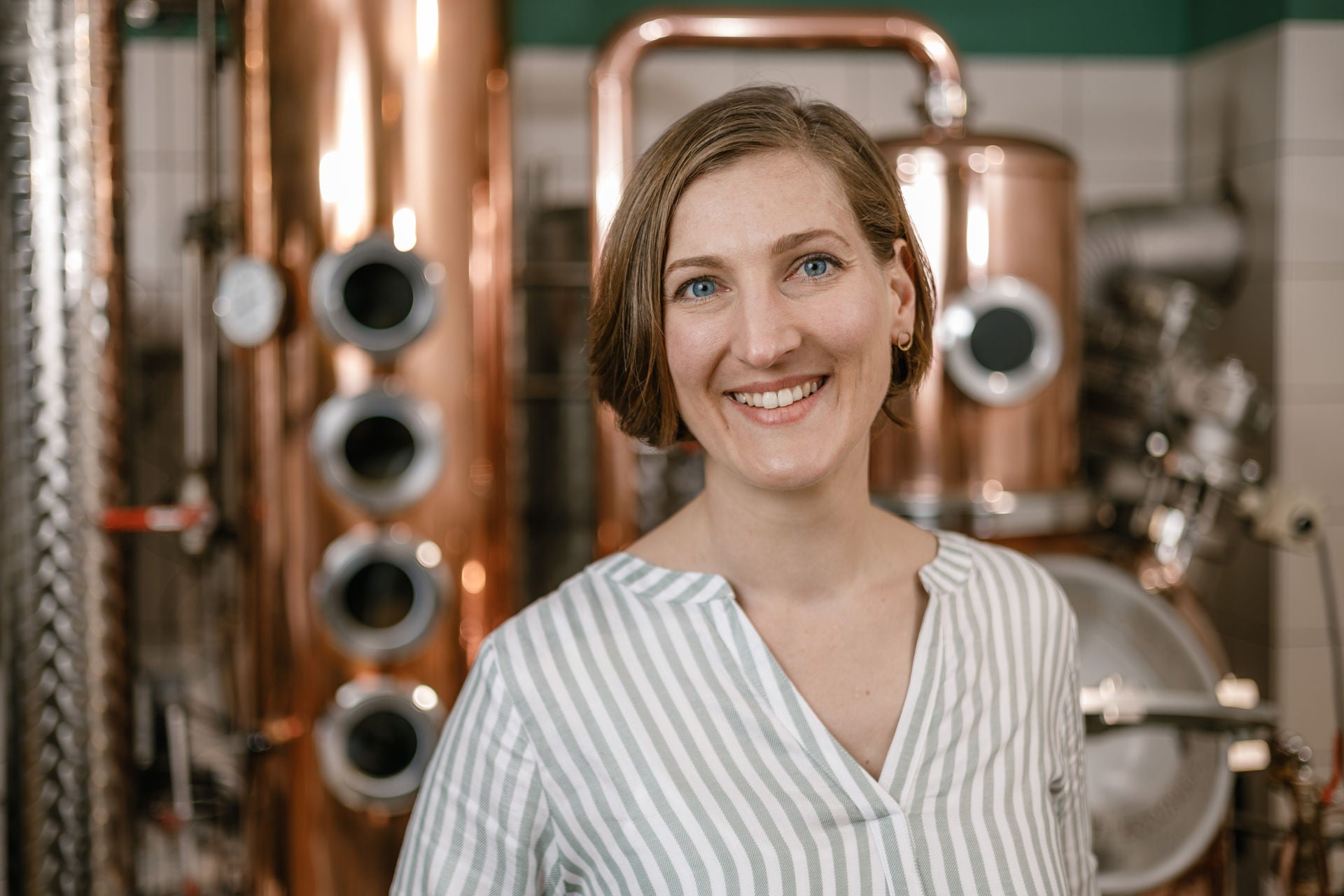
Author Andrea
Not only do I love distilling, but I also enjoy sharing my knowledge, experience, and passion. In my blog posts, I take you on a journey through everyday life at our distillery and on our small business. Of course, there are also drinks to enjoy along the way.


Wie gewohnt bringst Du die Fakten bestens zusammengefasst auf den Punkt. Würde ich so unterschreiben. Fruchtbrände herzustellen, welche Aromen und Charakter der Frucht perfekt einfangen und wiedergeben ist eine der schwierigsten Disziplinen für einen Brenner bzw. einer Brennerin.
Stand heute ist die Wertschätzung bei weitem nicht dort wo sie hingehören würde. Dies aufgrund von fehlendem Wissen, welcher wiederum auf geringe Sichtbarkeit und Förderung der Kategorie basiert.
Es bleibt nur eins wie von dir geschrieben: Sichtbarkeit schaffen, Wissen vermitteln – weiter machen. Danke für Deine Bemühungen.
Genau das gleiche erleben wir beim Cider: Cidre aus der Normandie wird als Qualitätsprodukt mit Tradition wahrgenommen. Handwerklich produzierter Cider aus Süddeutschland wird als Bauern-“Moscht” abgetan, der sauer, derb, und unzeitgemäß abgetan. Dabei gibt es in beiden Regionen natürlich gute und schlechte Produkte – wobei jede Region natürlich ihren eigenen Charakter hat. Und das ist ja auch gut so.
Toller Beitrag bzgl Obstbrände.
Leave a comment